If you earn a monthly salary and have been quietly doing the math on whether you could ever afford a proper home near Islamabad — this article is for you.
The honest answer is: yes, it is possible. And it has become more realistic in recent years because of how home financing in Pakistan has evolved. Programs like the PM Apna Ghar Scheme let salaried buyers purchase residential property through a bank loan and pay it back over time. You do not need to arrange the full amount upfront.
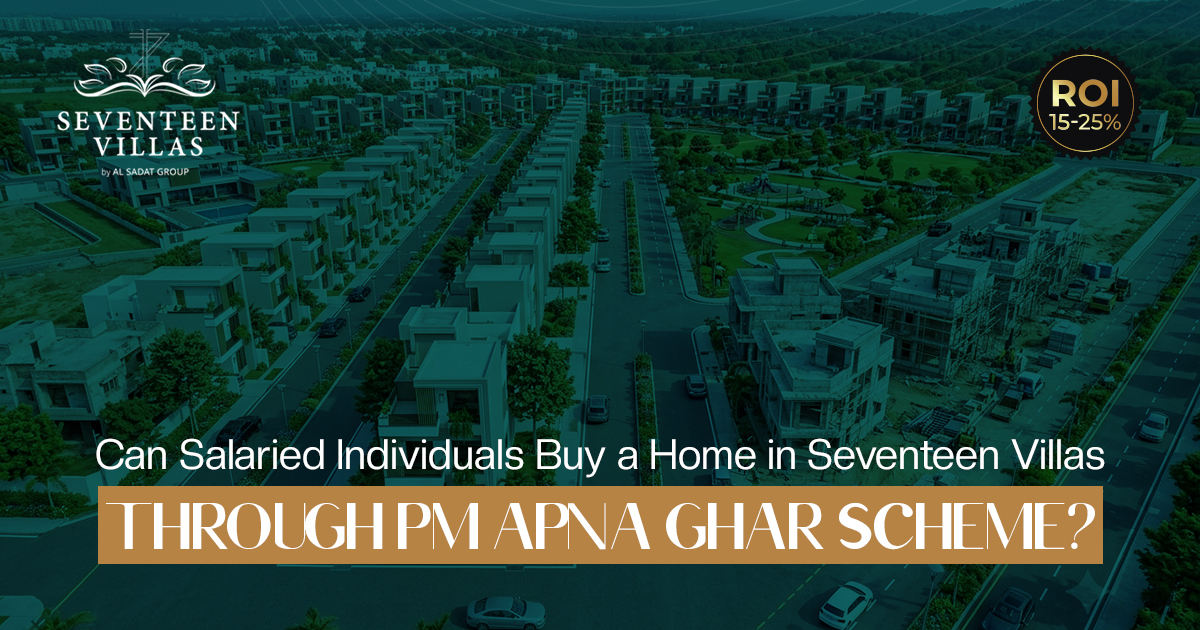
Seventeen Villas, a fully approved villa project near Islamabad, is one of the properties worth looking at if you are exploring this route. This article walks through who qualifies, what the bank actually needs from you, and what the process looks like for a first-time buyer.
What Is the PM Apna Ghar Scheme and How Does It Work?
The PM Apna Ghar Scheme — also known as the Wazir-e-Azam Apna Ghar Program — is a government-backed housing finance initiative that lets eligible buyers purchase a home through a bank loan rather than a lump-sum payment.
The way it works is straightforward. A participating bank finances most of the property cost on your behalf. You make a down payment upfront — typically around 10% of the property value — and then repay the remaining amount in monthly installments over a period that can stretch up to 20 years, depending on the bank’s terms.
The scheme runs through both conventional and Islamic banks, so buyers can choose a financing structure that fits their preference. Subsidized markup rates may apply for a defined initial period, after which the standard rate kicks in. Since the terms change periodically, it is worth confirming the current rates directly with whichever bank you plan to approach.
For salaried Pakistanis, this program has made it genuinely easier to stop renting and start owning — without needing to wait a decade to save the full property value.
Read more: How to Apply for PM Apna Ghar Scheme — Step-by-Step Guide for First-Time Buyers
Do Salaried Individuals Qualify for This Scheme?
Yes — salaried employees are among the primary applicants for the PM Apna Ghar Scheme. Most participating banks are set up to assess salaried applicants, because a regular monthly income makes repayment risk easier to evaluate.
That said, there are specific conditions you need to meet. Here is what banks typically look at:
You Should Be a First-Time Homebuyer
Most housing finance programs under this scheme are for people who do not already own a residential property in Pakistan. If your name is on a home anywhere in the country, your eligibility could be affected. Check this with your bank before applying.
Your Income Needs to Be Verifiable
Banks do not take your word for your salary. They want to see proof — and they want it in writing. You will typically need to provide salary slips from the past three to six months, an employment certificate from your employer, and six months of bank statements. If you file income tax returns, those may be required too.
The bank uses this information to calculate how much you can realistically repay each month. That calculation determines the maximum loan amount you qualify for.
Employment Stability Matters
Most banks require at least two years of continuous employment for permanent salaried applicants. If you are on a contract or have recently switched jobs, the bank will weigh that differently. It does not automatically disqualify you, but expect more scrutiny.
The Financing Limit Depends on Your Income
Some programs allow financing of up to PKR 10 million, but the amount you actually get approved for is based on your income and the bank’s assessment of your repayment capacity. Do not assume you will qualify for the maximum — calculate what your monthly salary can realistically support.
Down Payment Requirement
Plan for roughly 10% of the property value as a down payment from your own pocket. Some programs and banks may require slightly more. The rest is financed through the loan.
Read more: Apna Ghar Scheme 2026 — How to Get a Rs. 1 Crore Loan Under the Apna Ghar Program
Why Does the Bank’s Approval of the Project Matter?
This is something a lot of first-time buyers overlook, and it causes problems later.
Banks do not finance just any property. Before approving a home loan, the bank checks whether the housing project itself has valid legal documentation — the NOC, approved maps, and proper regulatory clearances. If a project does not have these in order, the bank will not process your application, no matter how good your income profile looks.
This is exactly why Seventeen Villas is relevant here. The project has full approval, with maps and documentation already cleared. That means when you go to the bank with this property, you are not starting from zero on the documentation side. The project-level paperwork is done.
It removes one of the most common delays in the bank financing process.
What Does Seventeen Villas Offer?
Seventeen Villas is a villa project near Islamabad built around planned residential living. The project has finished its legal groundwork — approvals, maps, and clearances are in place — and it offers the kind of organized community layout that appeals to families who want a permanent home rather than just an investment plot.
A few things buyers generally look for when assessing a project like this:
- Full legal approval and cleared documentation
- Proper infrastructure — roads, utilities, and boundary definition
- Family-oriented layout with security
- Location within reasonable distance of Islamabad
- A development that is progressing, not just on paper
For buyers using bank financing, the legal approval aspect is what matters most at the application stage. The rest — lifestyle, location, community feel — is what matters when you are deciding whether this is where you want to live.
What Documents Will the Bank Ask For?
Getting your paperwork ready before you walk into the bank saves a lot of back-and-forth. Here is what most banks ask for from salaried applicants:
From You Personally
- CNIC (or NICOP if you are an overseas Pakistani)
- Salary slips — usually the last three to six months
- Employment certificate on company letterhead
- Bank statements for the past six months
- Tax documents, if you file returns
From the Property Side
- Approved layout plan of the housing society
- NOC or regulatory approval documents
- Sale agreement or booking confirmation
- Any allotment letter issued by the developer
Seventeen Villas can help you pull together the property-side documents. The bank handles everything else on their end once the application goes in. Final approval — including how much the bank will finance and at what rate — is entirely the bank’s decision based on your profile.
What Does Buying Through Installments Actually Change?
The most practical change is this: you can stop waiting.
A lot of salaried families spend years in rental accommodation because they are trying to save enough to buy outright. By the time they get there, prices have moved. Financing lets you lock in a property now and pay for it over time from your income — essentially the same logic as any other major purchase, but for a home.
There are real trade-offs. You pay interest (or profit rate under Islamic financing) over the loan period, which means the total cost is higher than the sticker price. And you are committing to monthly repayments for up to 20 years. Neither of those things is a problem if the math works for your income — but go in with your eyes open on both points.
For families who want to move into a real home without waiting a decade to save the full amount, the trade-off usually makes sense.
Tip: Before you visit the bank, calculate 40% of your net monthly salary. That is roughly the maximum monthly installment most banks will approve for you. Work backward from there to figure out your realistic loan range.
Can Overseas Pakistanis Also Apply?
Yes. Several commercial and Islamic banks in Pakistan offer home financing products for overseas Pakistanis. NICOP holders are generally accepted in place of a standard CNIC.
The income verification process is slightly different for overseas applicants — banks typically ask for salary certificates from employers abroad, foreign bank statements, and remittance records. Some banks have dedicated overseas Pakistani desks that handle these applications.
If you are living abroad and looking to invest in property back home through a bank loan, it is worth calling two or three participating banks and asking specifically about their overseas Pakistani financing process before committing to anything.
A Word on Property Investment Near Islamabad
This information is primarily about home financing and eligibility — but since some buyers are also thinking about investment value, it is worth being honest about what you can and cannot expect.
Areas near Islamabad have seen demand grow over the past decade as the city expands and more families look for organized residential communities outside the capital. Projects with proper legal status and active development tend to attract more buyers over time, which generally supports property values.
That said, no one can guarantee what property prices will do. Market conditions change. Development timelines shift. Anyone who tells you they can guarantee a specific return on a property purchase is either mistaken or not being straight with you.
Buy in a project you have verified, at a price that makes financial sense for your situation, and do not rely on projected appreciation to make the numbers work.
Frequently Asked Questions
Can a salaried person apply for the PM Apna Ghar Scheme in Pakistan?
Yes. Salaried individuals are eligible to apply for the PM Apna Ghar Scheme through participating commercial or Islamic banks. The bank will assess your income, employment history, and repayment capacity before approving a financing amount.
What is the minimum down payment required under the PM Apna Ghar Scheme?
Most participating banks require a down payment of around 10% of the property’s value. The bank finances the remaining amount as a home loan, repayable in monthly installments over a period of up to 20 years.
Is Seventeen Villas eligible for bank home financing?
Yes, Seventeen Villas holds full regulatory approval with cleared maps and legal documentation. Banks generally require this before processing a home loan application tied to a specific property, making the project suitable for financing consideration.
What salary documents does a bank need for a home loan in Pakistan?
Banks typically ask for salary slips from the last three to six months, an employment certificate from your employer, six months of bank statements, and your CNIC. Tax documents may also be required depending on your income level and the bank’s policy.
What is the maximum home loan amount under the Apna Ghar Scheme?
Some financing programs under the scheme allow loans of up to PKR 10 million. The amount you actually get approved for depends on your monthly income, your debt obligations, and how the bank assesses your repayment capacity.
How long does it take to get a home loan approved in Pakistan?
Timelines vary by bank, but most home loan applications in Pakistan take between four to eight weeks from submission to approval, assuming your documents are complete and the property documentation is in order.
Can overseas Pakistanis apply for a home loan to buy in Seventeen Villas?
Yes. Several Pakistani banks offer home financing products for overseas Pakistanis with NICOP. Requirements include a foreign salary certificate, bank statements, and remittance records. Contact your preferred bank for the full list of documents required for overseas applicants.
Is buying property near Islamabad a good investment?
Demand for organized residential communities near Islamabad has grown as the city expands. However, property returns are not guaranteed and depend on market conditions, project quality, and timing. Buyers should research independently and not rely solely on projected appreciation when making a purchase decision.